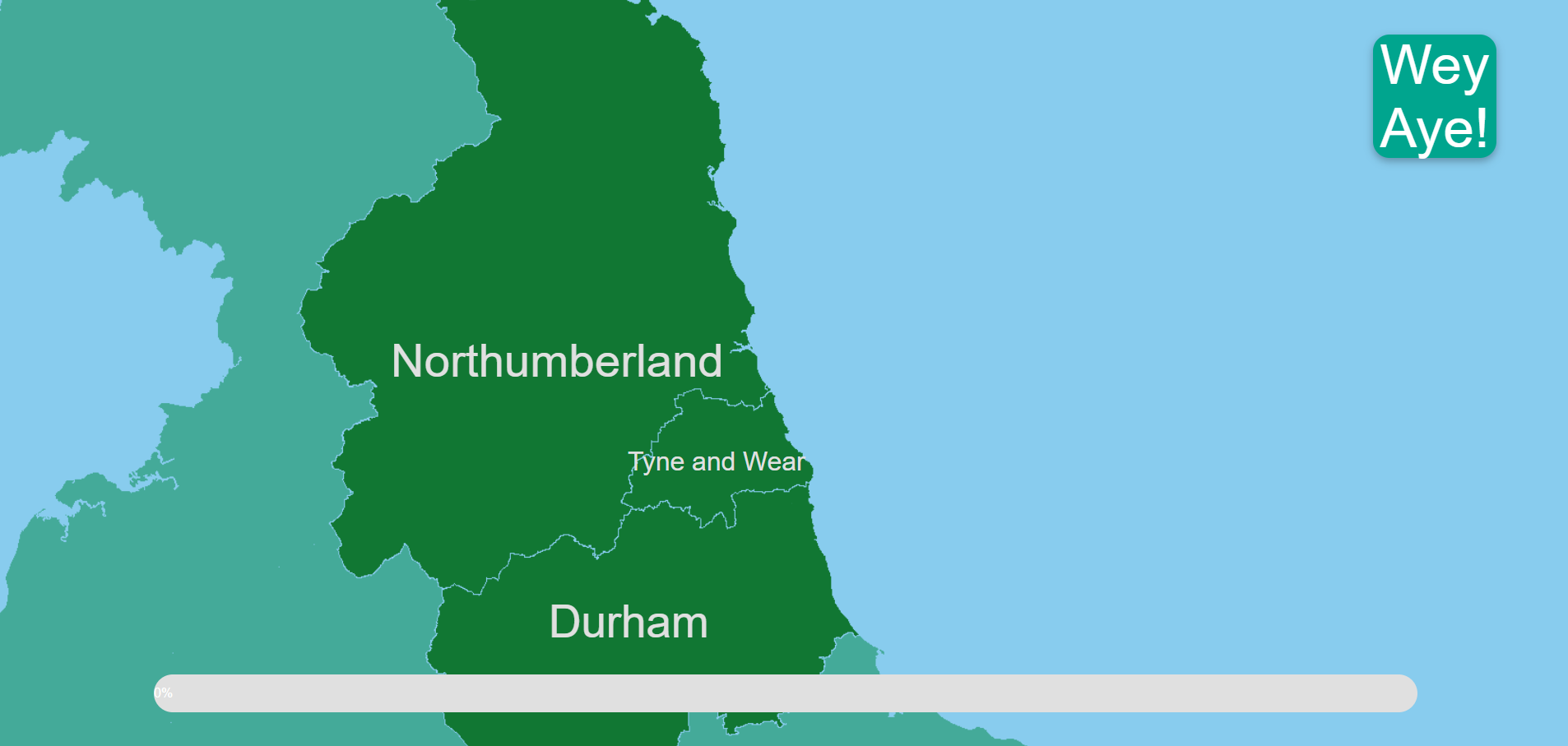
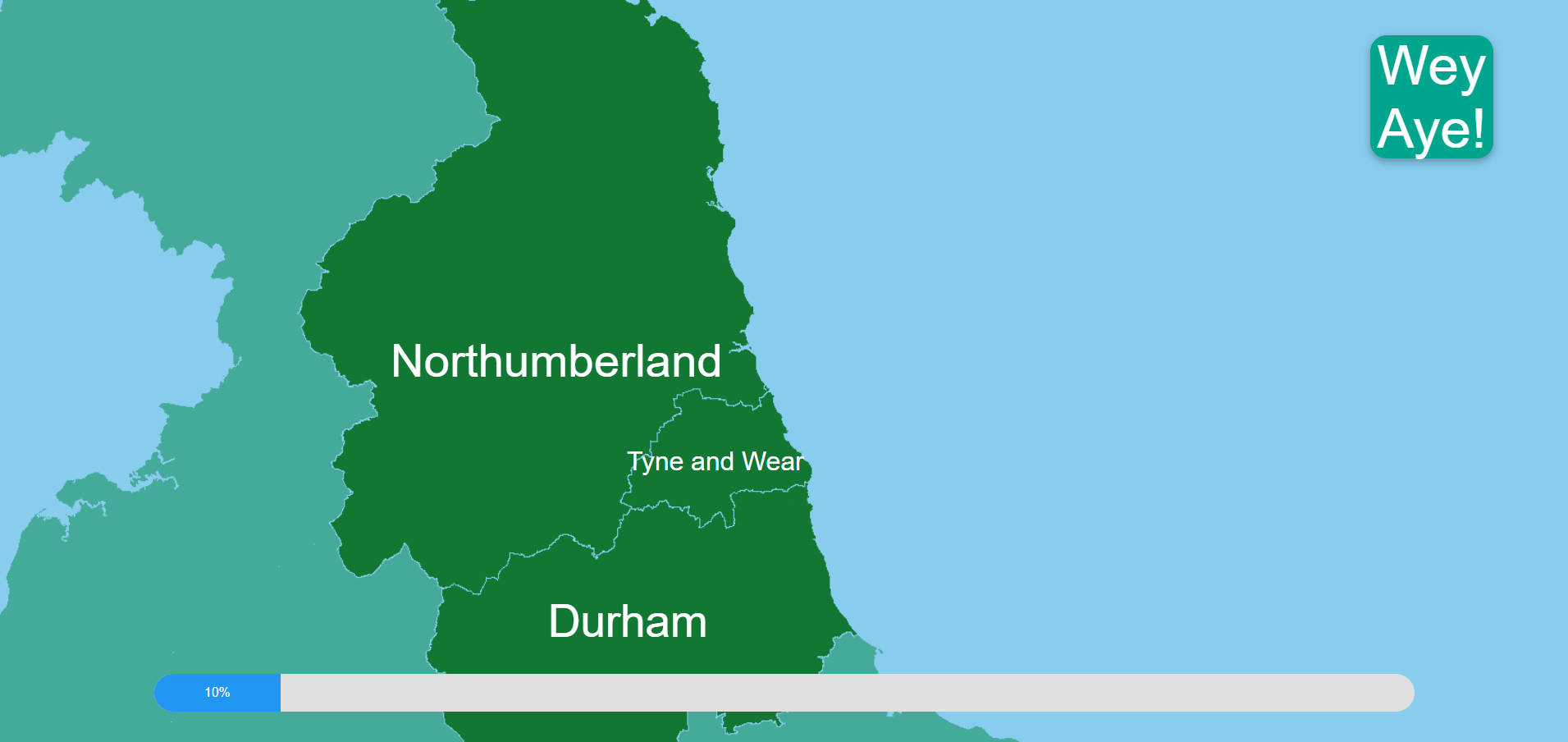
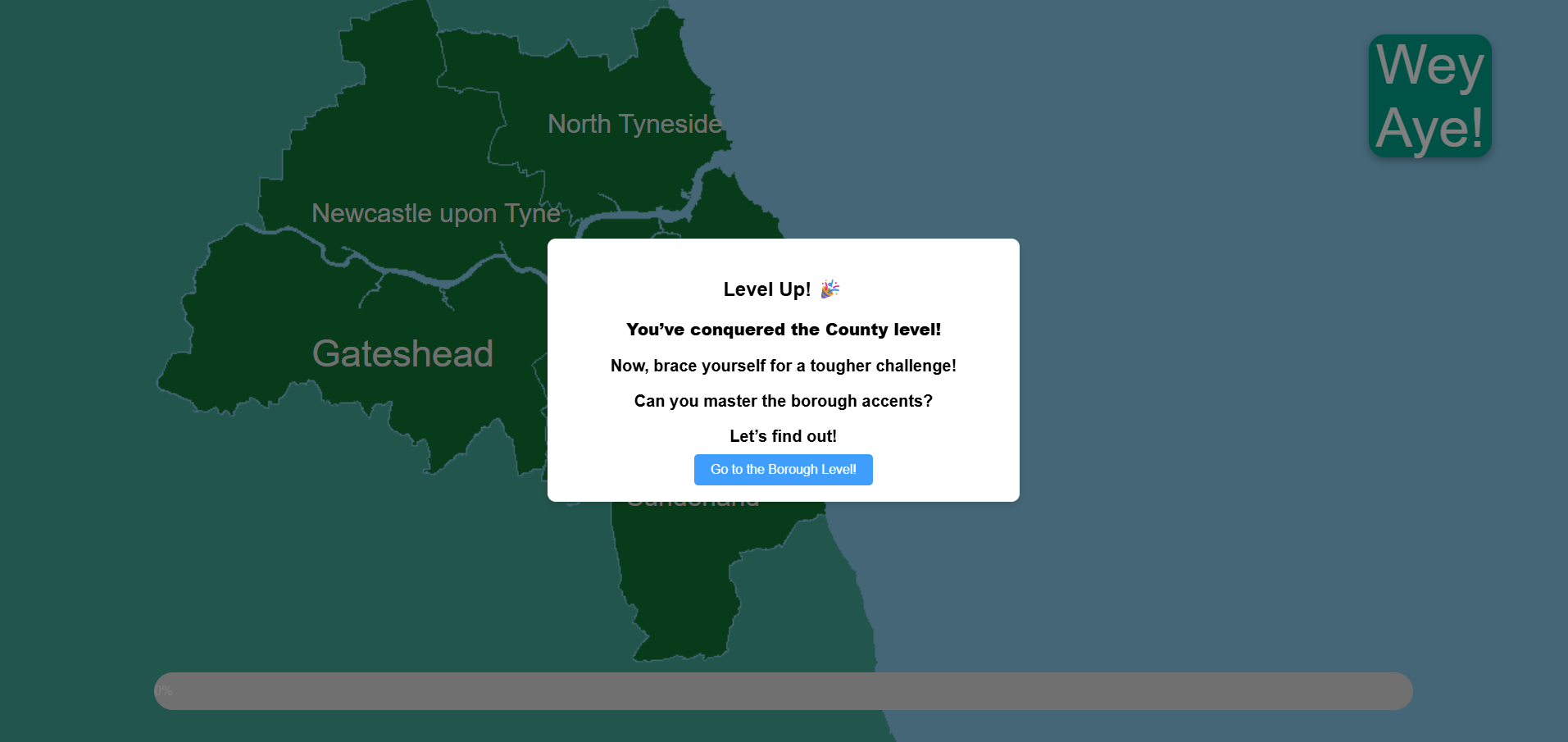
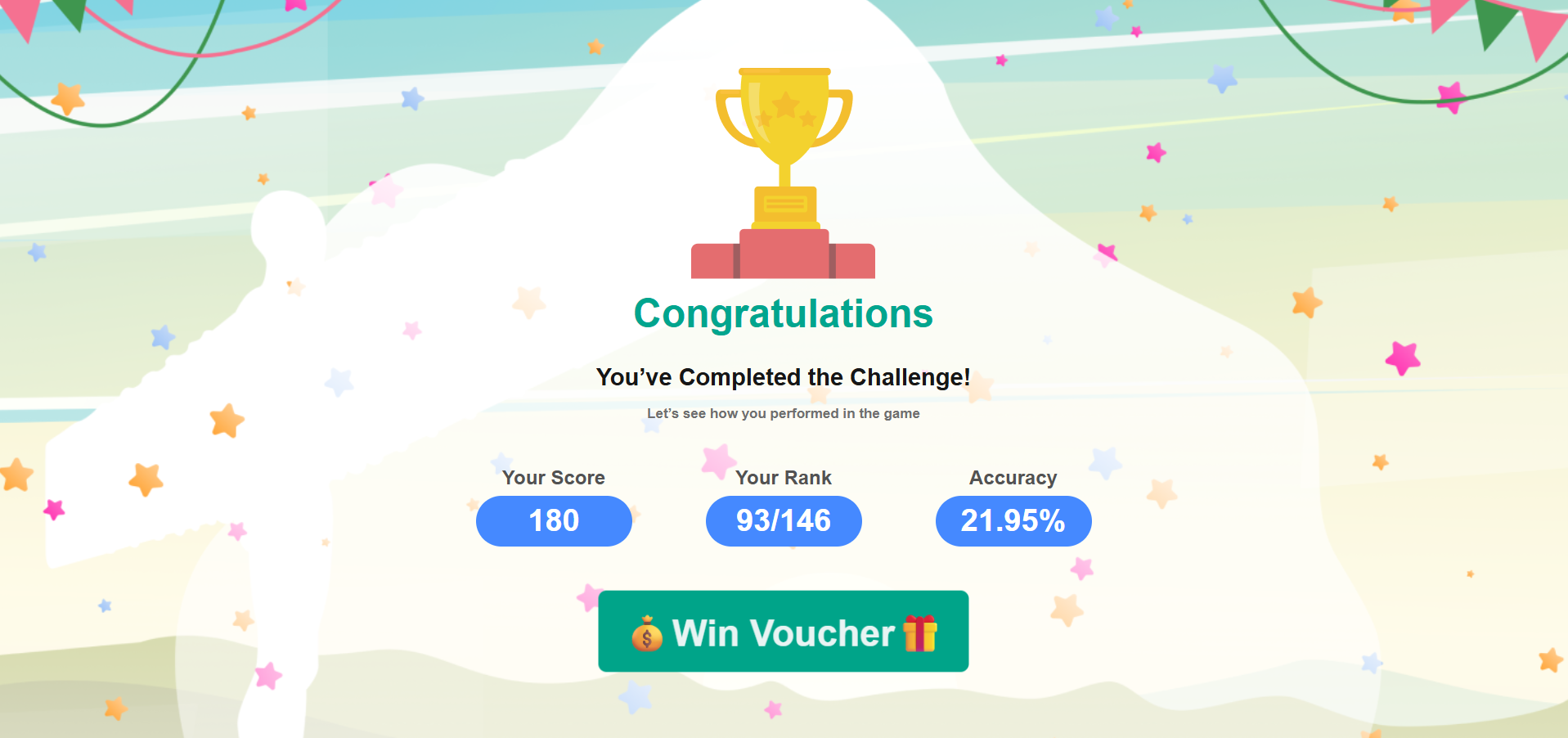
This project examines gamification as a methodological solution to long-standing challenges in research data collection, particularly issues of scale, participant diversity, and ecological validity. We use gamified approaches to embed experimental tasks within engaging interfaces that allow for large-scale data collection outside the laboratory. The project includes both a theoretical overview of gamified approaches in applied linguistics (Kim et al., 2024), and an empirical implementation using an accent identification game in North East England (Li et al., 2026). Together, these studies evaluate whether gamification can function as a valid experimental paradigm for linguistics research.
Data were collected through this online game. Voucher prizes are no longer available. The university server may occasionally go down; when this happens, only the questionnaire section is accessible. We apologise for any inconvenience.
Gamification has been increasingly adopted across a range of domains, including academic research, thanks to its inclusive and scalable nature. Gamified tasks involve the incorporation of game elements such as points, levels, and rewards within non-game contexts to enhance participant’ engagement and motivation. Despite its online accessibility and motivating nature, however, there is no agreed protocol regarding which gamified elements to include in what type of tasks, especially in linguistic research which is mostly text-based. Rather than proposing a one-size-fits-all solution, this paper demonstrates the viability of audio-based gamified tasks, testing whether listeners from the North East of England, a region in which many residents believe there are fine-grained dialectal distinctions, can accurately distinguish speakers by location. In comparison to traditional identification tasks, our tasks were gamified through the inclusion of elements such as a points system, a post-task leaderboard, and rewards for high-scoring participants. Results indicate that within-North East speaker identification was a more difficult task for listeners than folk belief would indicate. We suggest that despite its limitations, gamification successfully replaced traditional per-participant incentives as a data collection strategy in a phonetic perception study.
@article{li2026gamification,author={Li, Yanyu and Hoogland, Damar and Duncan, Daniel and Zhang, Cong},title={{Gamification in Phonetic Perception Data Collection: Accent Identification in North East England}},journal={Linguistics Vanguard},year={2026},doi={10.1515/lingvan-2025-0184}}
gamification
Collecting Big Data Through Citizen Science: Gamification and Game-based Approaches to Data Collection in Applied Linguistics
Gamification of behavioral experiments has been applied successfully to research in a number of disciplines, including linguistics. We believe that these methods have been underutilized in applied linguistics, in particular second-language acquisition research. The incorporation of games and gaming elements (gamification) in behavioral experiments has been shown to mitigate many of the practical constraints characteristic of lab settings, such as limited recruitment or only achieving small-scale data. However, such constraints are no longer an issue with gamified and game-based experiments, and as a result, data collection can occur remotely with greater ease and on a much wider scale, yielding data that are ecologically valid and robust. These methods enable the collection of data that are comparable in quality to the data collected in more traditional settings while engaging far more diverse participants with different language backgrounds that are more representative of the greater population. We highlight three successful applications of using games and gamification with applied linguistic experiments to illustrate the effectiveness of such approaches in a greater effort to invite other applied linguists to do the same.
@article{kim2024collecting,author={Kim, Yoolim and Kogan, Vita V and Zhang, Cong},title={{Collecting Big Data Through Citizen Science: Gamification and Game-based Approaches to Data Collection in Applied Linguistics}},journal={Applied Linguistics},volume={45},issue={1},pages={198-205},year={2024},issn={0142-6001},doi={10.1093/applin/amad039}}
Related talks:
gamification
Gamifying phonetic data collection: an accent identification and attitude study
Cong Zhang, Yanyu Li, and Damar Hoogland
Colloquium of the British Association of Academic Phoneticians (BAAP 2024) Cardiff, UK, Mar 2024
@conference{gamifying-c,author={Zhang, Cong and Li, Yanyu and Hoogland, Damar},title={Gamifying phonetic data collection: an accent identification and attitude study},booktitle={Colloquium of the British Association of Academic Phoneticians (BAAP 2024)},year={2024},month=mar,location={Cardiff, UK}}